
Buying Guides
Bunk Beds and Kids’ Beds: A Safety and Size Guide
The safety numbers worth memorising, the mattress depth line nobody explains, and why a thicker mattress quietly makes a bunk bed more dangerous.
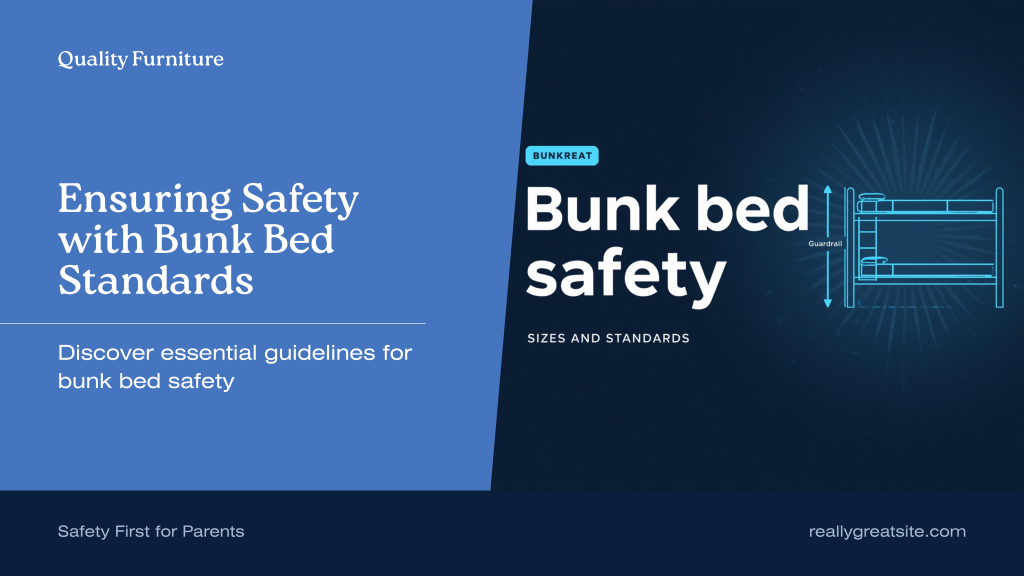
UK bunk beds should meet BS EN 747-1:2024. Children under six shouldn’t sleep on the top bunk. Guardrails must sit at least 160mm above the mattress, so never exceed the maximum mattress depth marked on the frame. Standard UK bunk mattresses are 90 x 190cm singles or 75 x 190cm small singles.
If you’ve got two or three children and one box room to fit them in, a bunk bed stops being a choice and starts being the only sensible answer. But bunks are one of the few things in a house where a wrong measurement can genuinely hurt someone, so this guide leads with safety. RoSPA reports that falls account for 44 per cent of all children’s accidents in the home, and a top bunk is around a metre and a half up.
What does BS EN 747 actually cover?
BS EN 747 is the British and European standard for bunk beds and high beds. The current version, BS EN 747-1:2024, was published in April 2024 and tightened several things the older edition left loose, including requirements for accessible holes and gaps and for the means of getting up top. It covers structure, safety barriers, ladders, stability, and the instructions and markings supplied with the bed.
It applies to beds with an internal length over 1,400mm, a bed base no wider than 1,200mm, and the upper surface of a bed base 600mm or more above the floor. That last figure catches people out: any bed with a sleeping surface 600mm up counts as a high bed, so plenty of mid sleepers and cabin beds fall under the same rules as full bunks. Alongside it, the Bunk Beds (Entrapment Hazards) (Safety) Regulations 1987 still sit in UK law and deal with the gaps a child’s head can get caught in.
Why shouldn’t children under six use the top bunk?
The warning is printed on the instructions of every compliant bunk sold here, usually word for word: the upper bed is not suitable for use by children under six years of age due to risk of injury from falls. Trading Standards guidance goes further and advises against under-sixes sleeping in bunk beds at all.
It isn’t about height, or how sensible your child is. It’s about what happens at two in the morning, when a younger child wakes disoriented and steps off the edge before they’re properly awake. Six is the line, and I wouldn’t shade it for a sale. If your five-year-old wants the top bunk, the honest answer is next year.
How high do the guardrails need to be?
This is the number worth memorising. Under BS EN 747, the top of the mattress must sit at least 160mm below the upper edge of the safety barriers. Sixteen centimetres of rail standing proud of the mattress, all the way round.
Both long sides of the top bunk need barriers, including the side against the wall, because beds get pulled out for hoovering and a child can roll into the gap. There’ll be an opening for the ladder, and the standard limits how big that can be, but it should be the only break in the rail.
Why does the maximum mattress depth line matter?
BS EN 747 requires the maximum mattress thickness to be permanently marked on the bed. Sometimes it’s a stamped line inside the frame, sometimes a sticker, and it’s always in the instructions. On many bunks that figure is around 14 to 15cm.
It isn’t a suggestion, and ignoring it is the easiest way to turn a safe bed into a dangerous one. The 160mm of guardrail is measured from the top of the mattress. Fit one 5cm thicker than the bed allows and you haven’t made it cosier, you’ve taken 5cm off the effective rail height. Add a topper as well and the rail barely clears the bedding, at which point a sleeping child can roll straight over it. Shop by depth as much as by feel. Our beds and mattresses guide covers how depth relates to comfort.
Which gaps are dangerous?
The 1987 Regulations exist because of one specific mechanism. A gap too narrow for a child’s head will stop them, and a gap wide enough lets them slip through. It’s the size in between that traps a head or a neck.
In UK law, structural gaps must not fall between 60mm and 75mm, and gaps in the sleeping surface must not exceed 75mm. On a bed you already own, check between the guardrail and the mattress, between the rail ends and the headboard, between slats, and around any decorative cut-out. If a gap looks like roughly two and a half to three inches, measure it properly.
Is the ladder fixed, or does it just hook on?
It should be fixed. A ladder that hooks over a rail can be lifted off or shifted sideways by a child climbing at an angle, so compliant bunks either build it into the frame or bolt it on. The 2024 revision tightened the access requirements: rungs are typically spaced around 200mm apart with a tread depth of at least 90mm, and the surface has to be slip resistant. Bare feet on smooth painted metal at night is exactly what the standard is written for. If you’ve fitted a ladder and it moves when you push it, it isn’t finished.
How much headroom do you need above the top bunk?
The standard doesn’t set a ceiling clearance, because it can’t know your house. This one is practical judgement, and the common guidance is around 750mm between the top of the mattress and the ceiling. Less than that and a child sits up sharply and catches their head. Measure your ceiling height, subtract the bunk’s overall height, then subtract the mattress depth. With a sloped ceiling or a stairs bulkhead, measure at the exact spot the bed will stand.
What size mattress does a UK bunk bed take?
- Single, 90 x 190cm (3ft x 6ft 3in). The standard UK single and by far the most common bunk size. Bedding is easy to find anywhere.
- Small single, 75 x 190cm (2ft 6in x 6ft 3in). Fifteen centimetres narrower, a real saving in a box room, but it needs 2ft 6in specific bedding.
- Shorty, around 75 x 175cm. Shorter as well as narrower, aimed at younger children. Fine at seven, outgrown at eleven.
Some bunks pair a small double below with a single on top, so check each tier separately. If the size names blur together, UK bed sizes explained lays them all out.
How do you measure the room and the doorway?
Measure the floor space, then add clearance. You want room to make the bottom bunk without crawling, and space for the ladder to stand away from the frame.
Then measure the route in. A bunk arrives flat packed, but the longest panel is usually close to the full length of the bed, and it has to get through your front door, round the hall and up the stairs. Measure the narrowest turn, not the widest door, because stair returns defeat more deliveries than doorways do. For awkward room shapes, our guide to beds for small bedrooms covers the layout side.
The safety checks that matter
| Check | What to look for | Why it matters |
|---|---|---|
| Standard | BS EN 747-1:2024 stated on the bed or instructions | Confirms testing for strength, stability and entrapment |
| Guardrail height | Mattress top at least 160mm below the barrier’s top edge | Stops a sleeping child rolling over the rail |
| Guardrail coverage | Barriers both long sides, including the wall side | Beds get pulled from walls, leaving a gap to fall into |
| Mattress depth | At or under the maximum marked on the frame | A thicker mattress silently lowers the effective rail height |
| Gaps | No structural gap between 60mm and 75mm | That range can trap a head or neck. A UK legal requirement |
| Ladder | Bolted or built in, slip resistant, doesn’t move | A ladder that shifts under weight causes falls on the climb |
| Headroom | Around 750mm from mattress top to ceiling | Prevents head injuries when a child sits up quickly |
| Fixings | All bolts present and tight, rechecked every few months | Frames work loose with daily climbing |
| Instructions | Kept, or downloadable from the manufacturer | They carry the mattress limit, age warning and fixing plan |
What should you check on a second-hand bunk bed?
Plenty of families buy second hand and I’m not going to pretend otherwise. But bunks are where I’d be fussiest.
- Ask which standard it was made to. An older bed may predate current requirements, and with no label you’re guessing about the parts you can’t see.
- Measure every gap yourself. The 60 to 75mm rule takes five minutes to check.
- Count the fixings. Missing bolts get replaced with whatever’s in the drawer. A bunk is a structure under load and needs the specified fastener, not a near enough one.
- Look for the mattress depth mark. If it isn’t there, you don’t know the limit, and any mattress you buy is a guess.
- Find the instructions before you dismantle it. This is the real problem with second-hand bunks. Once it’s in pieces with no instructions and no parts list, you’re rebuilding a load-bearing structure from memory. Get the PDF from the manufacturer first, and if you can’t identify the model, think hard about taking it at all.
Assembly, and the part everyone forgets
Build it in the room it will live in, follow the sequence in the instructions rather than the one that seems obvious, use the fixings supplied, and get a second person for the top section.
Then set a reminder on your phone. Bolts work loose. A bed climbed several times a day and slept on nightly will loosen over months, and nobody notices until it creaks and sways. Re-tighten every few months and after any house move. Ten minutes with an Allen key.
What are the alternatives?
- Mid sleepers raise one bed to waist height with storage or a desk under it. Remember the 600mm rule: many still count as high beds with the same guardrail requirements.
- Cabin beds sit lower, with drawers in the base. Good for one child where storage is the real problem, and our small bedroom storage guide covers this properly.
- Trundle beds hide a second mattress underneath and pull out at night. Both children sleep at floor level, which removes the fall risk entirely. Ideal where one child is under six.
- Two singles, if the room takes them. Rearranging sometimes releases more space than you’d expect.
You’ll find all of these in our beds and mattresses range, with mattress protectors and bed guards in accessories.
When do children outgrow a bunk bed?
Usually between eleven and fourteen, and it’s rarely about length, since a 190cm single fits most teenagers. What goes first is headroom for sitting up, privacy, and the fact that a fifteen-year-old climbing a ladder past their sibling every night stops being charming.
Check the top bunk weight limit in the instructions, since it’s stated per tier and a growing teenager reaches it sooner than you’d think. Many bunks split into two separate singles, worth checking before you buy if you’re planning years ahead.
If the right bed isn’t something you can manage in one payment, we let you spread the cost weekly or monthly through Snap Finance. Credit is subject to status and affordability checks, you’ll need to be 18 or over and a UK resident, and Indoor Living Ltd is a credit broker, not a lender. There’s a plain explanation on our how it works page, and more guides like this one over on Where there’s a will, there’s a way.
Common questions
What age can a child sleep on the top bunk?
Six years old is the minimum. Compliant UK bunk beds carry a warning that the upper bed is not suitable for children under six due to the risk of injury from falls, and Trading Standards guidance advises against under-sixes using bunk beds at all. Six is a safety threshold, not a manufacturer’s suggestion.
How thick can a bunk bed mattress be?
Only as thick as the maximum depth permanently marked on the bed, often around 14 to 15cm. BS EN 747 requires the guardrail to stand at least 160mm above the top of the mattress. A deeper mattress, or an added topper, reduces that clearance and makes it easier for a sleeping child to roll over the rail.
What size mattress fits a UK bunk bed?
Most take a standard UK single at 90 x 190cm, or a small single at 75 x 190cm for narrower rooms. Shorty bunks use around 75 x 175cm. Check each tier separately, since some bunks pair a small double base with a single on top, and confirm the maximum mattress depth as well as the size.
Which gap sizes are unsafe on a bunk bed?
Under the Bunk Beds (Entrapment Hazards) (Safety) Regulations 1987, structural gaps must not fall between 60mm and 75mm, because that range can trap a child’s head or neck. Gaps in the sleeping surface must not exceed 75mm. Check rail ends, slat spacing and any decorative cut-outs with a tape measure.
How much space do I need above the top bunk?
Aim for roughly 750mm between the top of the mattress and the ceiling, so a child can sit up without hitting their head. This isn’t set by BS EN 747, it’s practical guidance. Measure the ceiling height at the exact spot the bed will stand, then subtract the bunk height and the mattress depth.
Important information
Missing payments could affect your credit rating and make future borrowing more difficult or more expensive.
Credit subject to status and affordability checks. 18+, UK residents only. Terms apply. Indoor Living Ltd is a credit introducer, not a lender.